
Choosing the right architectural visualization for your project can be the difference between a successful presentation and a missed opportunity. Whether you're an architect wanting to present a concept, a real estate developer aiming for pre-sales, or a marketing agency seeking impressive visual material: the key is understanding your options and choosing strategically.
With over 15 years of experience in 3D rendering and architectural visualization, at AMMO we've seen every type of project: from small apartments to entire building complexes. And we know that a project's success starts with choosing the right type of visualization.
What is Architectural Visualization?
Architectural visualization is the process of creating visual representations of an architectural design. In real estate, 3D visualization is no longer a luxury: it's an essential sales tool. Studies show that properties with photorealistic renders sell faster and at higher prices.
The visualization industry has evolved significantly. Today's clients don't just want to see blueprints: they want to experience spaces before they're built. This shift has made choosing the right visualization approach more critical than ever.

Types of Architectural Visualization and When to Use Each
Static Renders (Still Images)
Photorealistic rendering delivers hyper-detailed images that look like photographs, making it the most cost-effective solution for brochures and websites. These images showcase realistic lighting, textures, and shadows to help clients envision completed designs.
When to use static renders:
- Marketing materials and property brochures
- Website galleries and social media posts
- Client presentations requiring maximum detail
- Budget-conscious projects with tight timelines
3D Animations and Walkthroughs
Architectural walkthroughs allow viewers to navigate through spaces in a cinematic way. These are ideal for virtual tours and social media content, offering a dynamic perspective that static images cannot provide.
Animations work best for:
- Large-scale developments requiring comprehensive overviews
- Social media campaigns and video marketing
- Investor presentations
- Public consultations and community engagement
Virtual Reality (VR) Experiences
VR walkthroughs enable clients to "walk" inside the space before it's even built. Using phones or VR headsets, they can explore rooms, change viewing angles, and truly understand spatial relationships. This immersive technology is particularly effective for large projects and detailed design validation.
White Model (Clay) Renders
These stripped-down visualizations remove textures and colors to focus purely on geometry and form. They're excellent for design competitions, internal reviews, and testing multiple iterations quickly without the distraction of materials and finishes.
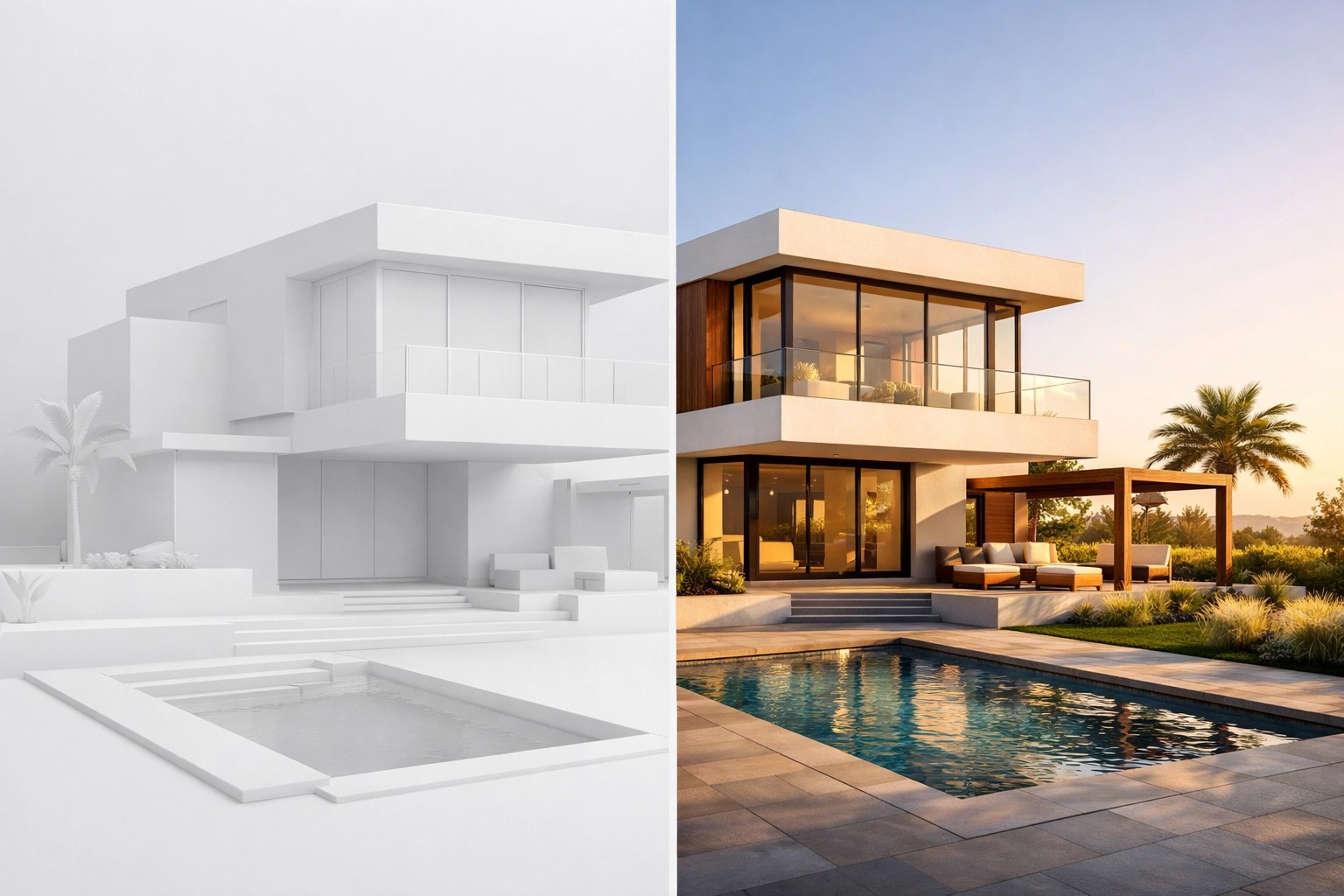
Interior Rendering vs Exterior Rendering: What You Need to Know
Exterior Rendering
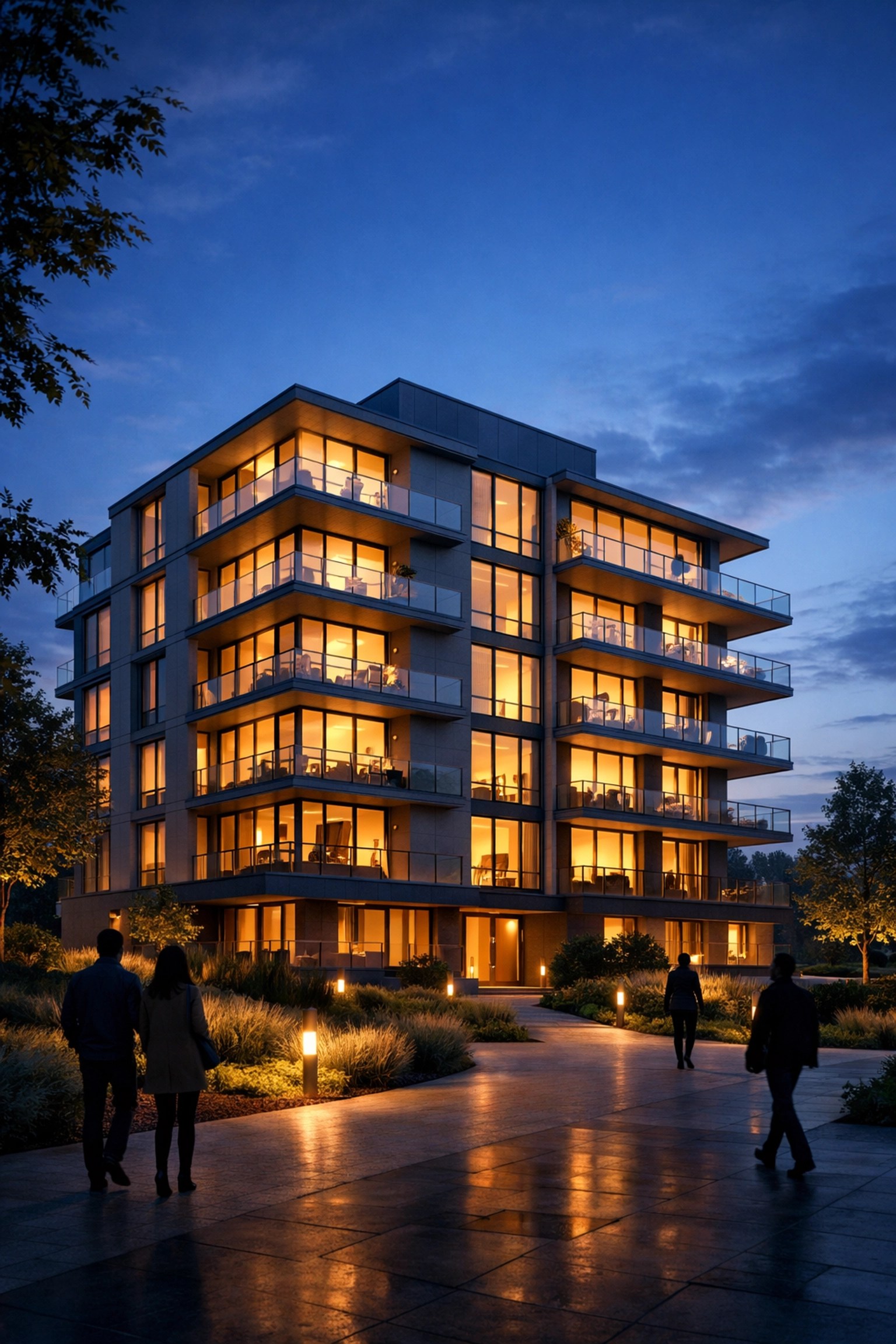
Exterior rendering focuses on the building's façade and surrounding environment. It's critical for planning approvals and marketing the architectural philosophy. Quality exterior renders should include:
- Realistic landscaping and context
- Accurate lighting conditions (time of day, season)
- Environmental elements (people, vehicles, atmospheric effects)
- Integration with the surrounding neighborhood
Exterior visualizations are essential when:
- Seeking planning permission or design approval
- Marketing a building's architectural identity
- Presenting to stakeholders who need to understand street-level impact
- Showcasing innovative façade designs or sustainable features
Interior Rendering
Interior rendering reveals the layout, materials, and lighting within spaces. It's essential for helping buyers imagine their life there. High-quality interior renders demonstrate:
- Material textures and finishes
- Furniture placement and spatial flow
- Natural and artificial lighting scenarios
- Atmosphere and mood
Interior visualizations become crucial for:
- Pre-selling residential units
- Hotel and hospitality projects
- Retail space leasing
- Custom home design presentations
The most effective projects typically combine both interior and exterior renders to tell a complete story.
Photorealistic Rendering: Why It Makes the Difference
Photorealistic rendering builds trust. When a buyer sees realistic textures and natural lighting, they feel confident about the final result. This isn't just about aesthetics: it's about removing doubt from the decision-making process.
The level of detail in photorealistic visualization includes:
- Accurate material properties (reflection, refraction, roughness)
- Physically-based lighting calculations
- Atmospheric effects and depth
- Real-world imperfections that make scenes believable

Properties marketed with photorealistic renders consistently outperform those with basic visualizations. The investment in quality rendering typically returns multiples through faster sales cycles and premium pricing.
Real-Time vs Traditional Rendering: Understanding Your Options
The visualization industry now offers two main approaches, each with distinct advantages.
Real-Time Rendering
Real-time software like Enscape and Twinmotion provides instant visual feedback during the design process. If you want seamless CAD/BIM integration with instant updates, this approach offers:
- Immediate visualization of design changes
- Interactive client presentations
- Lower cost per iteration
- Faster project turnaround
Real-time rendering excels during the design development phase when changes are frequent.
Traditional Rendering
Software like V-Ray, Corona, and 3ds Max produces the highest quality final images through longer calculation times. These tools deliver:
- Maximum photorealism and detail
- Complete control over every visual aspect
- Polish suitable for marketing materials
- Results that can be further refined in Photoshop
Traditional rendering is ideal for final marketing materials where quality cannot be compromised.
How to Brief Your Visualization Project for Success
Clear communication determines project success. When working with a visualization studio like AMMO, provide:
Essential Project Information:
- Architectural drawings (plans, elevations, sections)
- 3D model files if available (Revit, SketchUp, Rhino)
- Material specifications and finishes
- Lighting requirements and preferences
- Target audience and intended use
Visual References:
- Mood boards or reference images
- Competitor examples (what to match or avoid)
- Brand guidelines if applicable
- Specific view angles or focal points
Practical Details:
- Delivery deadline
- Image resolution requirements
- Number of views needed
- Revision rounds included
The more complete your brief, the more accurately the visualization will match your vision: and the fewer revision cycles you'll need.
Why Choose AMMO for Your Architectural Visualization
At AMMO, we offer a combination that's rare in the industry:
Deadline Adherence: We respect your time and understand that marketing launches and planning submissions don't allow for delays. Our project management systems ensure on-time delivery without compromising quality.
Photorealistic Quality: Our work represents the highest standards in photorealistic rendering. We don't cut corners on lighting calculations, material accuracy, or atmospheric effects.
Technical Understanding: We speak the language of architects. Our team understands building systems, construction methods, and design intent: which means we can interpret drawings accurately and ask the right questions early.
Experience Across Sectors: With 15+ years delivering projects from residential to commercial, from small renovations to master-planned communities, we've refined our workflows to handle any scale or complexity.
Clear Communication: You'll always know your project status. We provide regular updates, respond quickly to questions, and maintain transparent timelines.
Making Your Decision
When selecting architectural visualization for your project, consider:
- Project stage: Early concepts need flexibility; marketing requires polish
- Budget allocation: Balance quality with quantity of views needed
- Timeline constraints: Real-time rendering speeds up iteration
- Audience expectations: Investors and end-buyers have different needs
- Long-term use: Marketing materials justify higher investment
The right visualization approach amplifies your design vision and accelerates your project success: whether that means faster approvals, quicker sales, or more confident decision-making.
Ready to discuss your project? Contact AMMO to explore how professional architectural visualization can transform your presentations and accelerate your results.
Leave a Reply